Winter Safety for Seniors at Home
Sarah Jenkins
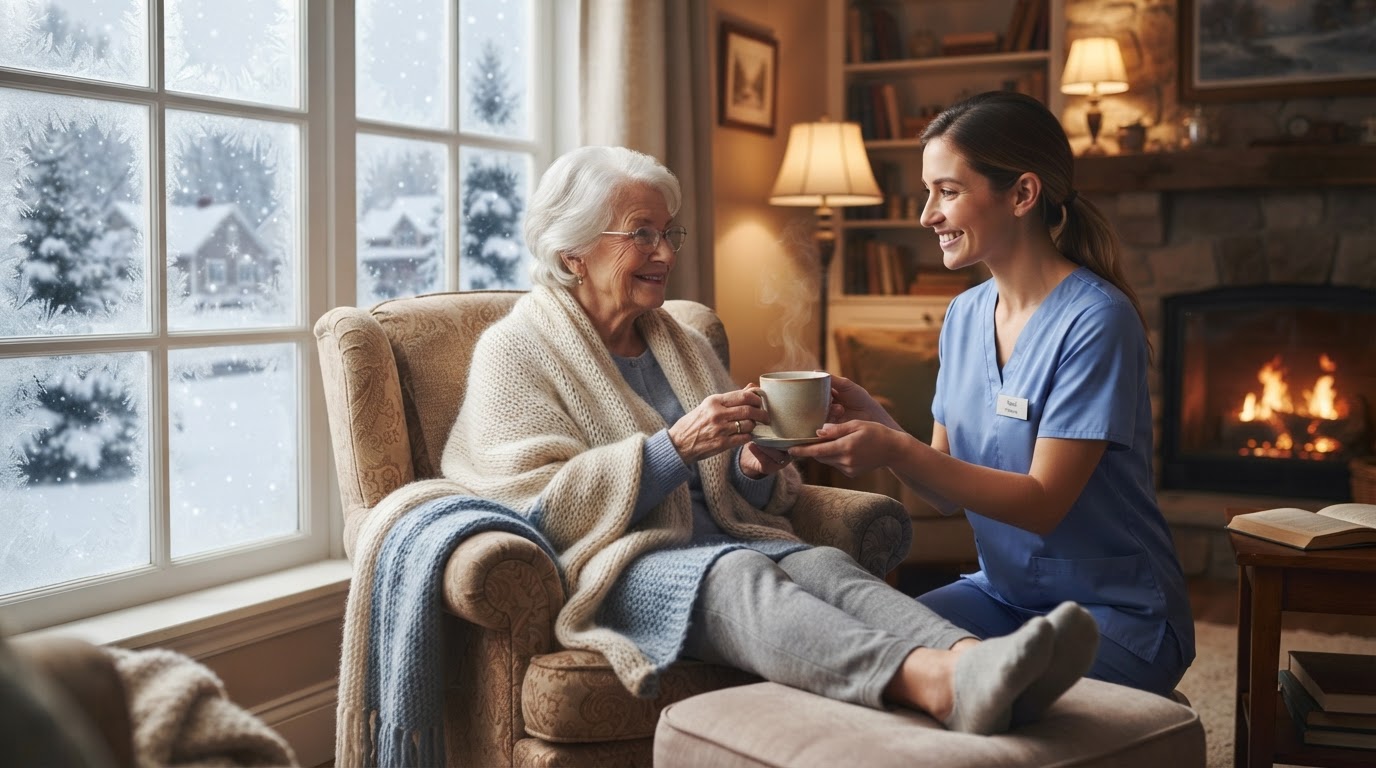
Winter in Milwaukee is more than a season — it is a test of preparedness, especially for older adults living at home. Ice on the front steps, a furnace that struggles on the coldest night, a driveway that has not been shoveled, and a power outage that arrives without warning: each of these is a minor inconvenience for a young person and a genuine hazard for a senior. According to the Centers for Disease Control and Prevention, older adults are at higher risk for cold-related illness, falls on ice, and carbon monoxide poisoning during the winter months. This guide walks through practical winter safety for seniors at home and explains how in-home caregivers in Milwaukee and the surrounding communities help families keep their loved ones safe, warm, and connected all season long.
Hypothermia and Cold-Related Illness
Hypothermia is one of the most serious winter risks for seniors, and it can happen indoors — not just outside in the cold. As we age, the body becomes less efficient at regulating temperature, and many common medications further reduce the ability to feel cold or shiver. A senior sitting in a 64-degree room may be slowly developing hypothermia without realizing it. Warning signs include shivering, slurred speech, confusion, slowed reflexes, and unusually cold or pale skin.
The solution is not simply turning up the heat. It is making sure the home stays consistently warm — at least 68 degrees — and that the senior is dressed in layers even indoors. Warm socks, a hat, and a lap blanket are not luxuries in January; they are practical tools. An in-home caregiver checks in daily, makes sure the thermostat is set correctly, helps with warm layers, and watches for the subtle signs of cold-related illness that a family member might miss over the phone.
The National Institute on Aging offers detailed guidance on hypothermia prevention for older adults (nia.nih.gov), including the warning signs to watch for and steps to take if hypothermia is suspected.
Fall-Proofing for Ice and Snow
Falls are the leading cause of injury for older adults year-round, but winter adds a new layer of danger. Icy sidewalks, snow-covered curbs, and wet floors from tracked-in slush turn an ordinary trip to the mailbox into a fall risk. Inside the home, puddles from melting boots and dim winter light increase the chance of a slip.
Fall-proofing for winter starts before the first snow. Check that outdoor railings are sturdy, that walkways are clear and salted, and that the entryway has a mat that absorbs moisture so boots do not leave slick patches on the floor. Inside, make sure lamps are bright enough to compensate for short, overcast days, that throw rugs are secured or removed, and that the path from the bedroom to the bathroom is well-lit even at night. These are the same principles we cover in our guide to creating a safe home environment and preventing falls, but winter demands extra vigilance.
An in-home caregiver provides the daily presence that makes winter fall-prevention work in practice. They salt the front steps before the senior goes out, pick up the mail so the senior does not have to navigate ice, and keep the entryway dry. Our housekeeping and home maintenance support helps Milwaukee-area seniors keep their homes safe and dry through the messiest months, so the household does not become a hazard.
Heating, Fire, and Carbon Monoxide Safety
Heating systems work hardest in winter, and that is when they are most likely to fail. Have the furnace inspected before the cold sets in, and keep space heaters — a leading cause of winter house fires — at least three feet from anything flammable. Never use an oven to heat a room, and never run a generator or charcoal grill indoors or in a garage, even during a power outage.
Carbon monoxide is colorless, odorless, and deadliest in winter when homes are sealed tight and heating systems are running constantly. The CDC recommends installing battery-operated carbon monoxide detectors on every level of the home and testing them monthly. If a senior lives alone, a caregiver can help by testing detectors, replacing batteries, and making sure the furnace filter is changed on schedule. The Centers for Disease Control and Prevention provides detailed guidance on preventing carbon monoxide poisoning (cdc.gov).
Winter Nutrition and Hydration
Winter changes how seniors eat and drink. Appetite naturally decreases in cold weather, and the body's thirst signal is less reliable, which means dehydration is a year-round problem that goes easily unnoticed in winter. Warm, nourishing meals and regular fluids are essential — not just for comfort, but for immune function, skin health, and energy.
A caregiver who prepares meals and monitors fluid intake makes the difference between a senior who simply eats what is available and one who eats well. Warm soups, stews, oatmeal, and herbal tea are not only comforting; they help older adults stay hydrated and nourished when cold makes them less inclined to eat and drink. Our meal preparation support helps Milwaukee seniors maintain balanced, consistent nutrition through the winter, while our guide to hydration for seniors covers the specifics in more detail.
Emergency Preparedness
Milwaukee winters bring ice storms, heavy snow, and the occasional multi-day power outage. For a senior, a few hours without power is uncomfortable; a few days can be dangerous. An emergency kit should include flashlights with extra batteries, a battery-powered radio, a supply of non-perishable food and water, warm blankets, a first-aid kit, and a backup supply of medications. Keep a list of emergency contacts and the utility company's outage line by the phone.
It is also wise to establish a check-in plan: a neighbor, family member, or caregiver who calls or visits daily during extreme cold. If the power goes out and the home drops below a safe temperature, the senior needs a warm place to go — whether that is a family member's home, a community warming center, or a nearby senior center. A caregiver who checks in daily can recognize a problem early, before it becomes an emergency.
Staying Connected and Active Indoors
Winter isolation is one of the most overlooked risks for seniors. Ice and snow keep people home, visitors cancel, and the routines that normally bring a senior into contact with others — a trip to the senior center, a walk around the block, a weekly card game — fall away. The National Institute on Aging links social isolation to higher rates of depression, cognitive decline, and even heart disease. For a senior already vulnerable to loneliness, winter can quietly deepen the problem.
A caregiver does more than help with physical tasks; they provide the social contact that keeps isolation at bay. A daily visit, a conversation over a warm lunch, a shared game or hobby — these are the moments that keep a senior connected and engaged even when the weather keeps everyone inside. Our companionship care is often the single most important winter service a family arranges, because it addresses the isolation that no physical modification can fix.
Expert Guidance and Local Support
The Centers for Disease Control and Prevention offers comprehensive winter weather safety resources for older adults (cdc.gov), and the National Institute on Aging provides guidance on cold-weather safety and hypothermia prevention (nia.nih.gov). If your loved one in Milwaukee or the surrounding area could use help staying safe, warm, and connected this winter, our Milwaukee-area caregivers are here to help.
Conclusion
Winter safety for seniors at home is not one big project but a collection of small, practical habits: keeping the home warm, fall-proofing the walkway, testing the carbon monoxide detector, preparing warm meals, building an emergency kit, and making sure someone checks in every day. None of these is complicated, but together they are the difference between a senior who weathers the season safely and one who ends up in the emergency room. With the right preparation and the steady presence of an in-home caregiver who knows the routine, Milwaukee-area seniors can stay warm, safe, and connected all winter long — and the families who love them can have peace of mind when the temperature drops.