Parkinson's Disease and In-Home Care for Seniors
Sarah Jenkins
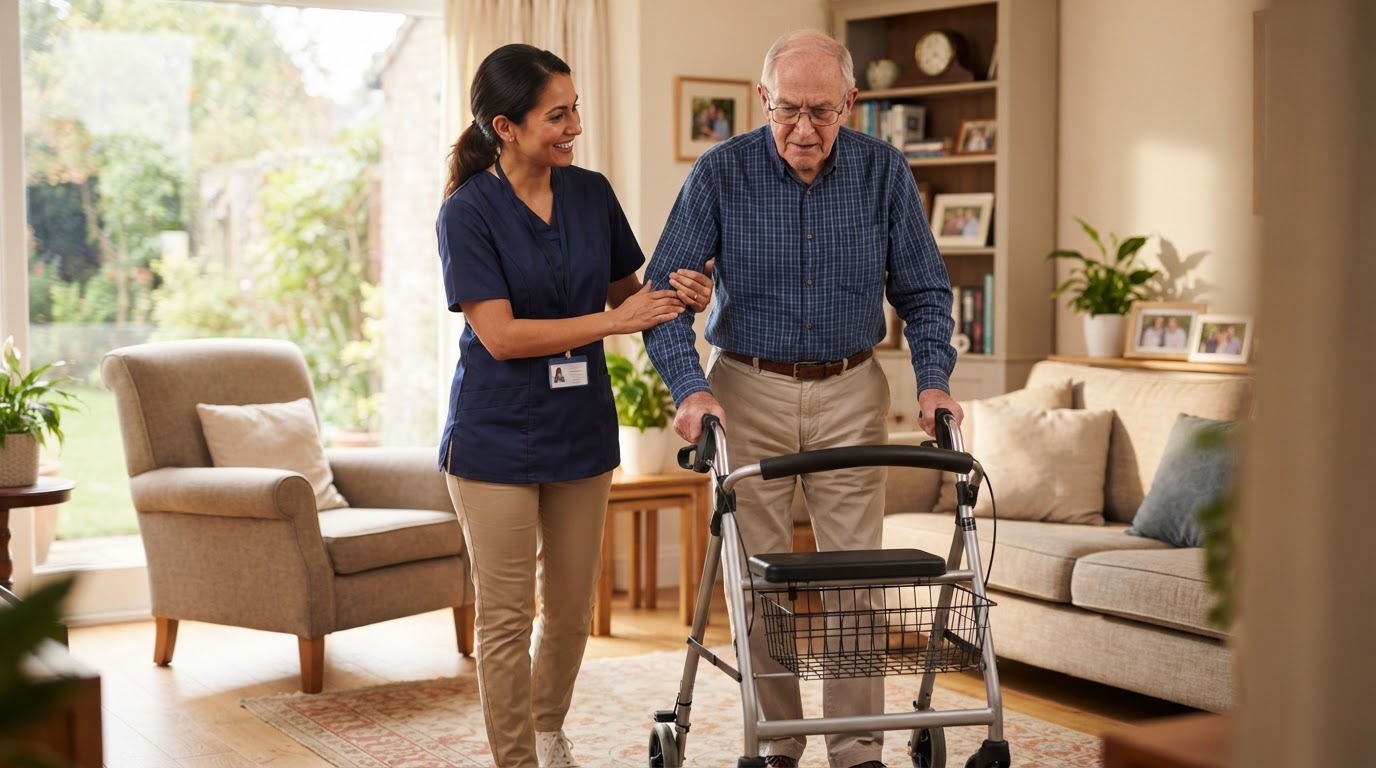
Parkinson's disease is a progressive neurological condition that gradually changes how a person moves, speaks, eats, and manages the everyday tasks most of us take for granted. It develops slowly, often beginning with a slight tremor or a stiffness in one limb, and over time it can reshape a senior's entire daily routine. While there is no cure yet, thoughtful, consistent in-home support helps older adults live meaningfully and safely with the disease for years after diagnosis. According to the National Institute of Neurological Disorders and Stroke, early and ongoing management, including regular physical activity and careful medication timing, can meaningfully improve quality of life. This guide explains what families in Milwaukee and surrounding communities should understand about Parkinson's home care — and how a trained in-home caregiver helps bridge the gap between clinic appointments and day-to-day comfort.
Understanding Parkinson's Disease and Its Progression
Parkinson's occurs when nerve cells in the brain that produce dopamine — a chemical that helps control movement — gradually stop working or die. As dopamine levels fall, the familiar motor symptoms of the disease begin to appear: tremor, rigidity, slowed movement (bradykinesia), and problems with balance and posture. The Parkinson's Foundation emphasizes that the disease also brings a range of non-motor symptoms that often go unrecognized, including changes in sleep, mood, digestion, speech, and thinking. These symptoms do not always appear in a predictable order, and they vary widely from person to person.
Parkinson's is usually described in five stages, beginning with mild symptoms that may be barely noticeable and progressing toward significant difficulty with balance, walking, and independent self-care. Most older adults are diagnosed around stage one or two. The pace of progression is highly individual — some people live for decades with manageable symptoms, while others experience faster changes. Understanding where a loved one falls along this continuum is essential to designing the right in-home support, because the needs of someone in early-stage Parkinson's are very different from those of someone facing advanced mobility and cognitive changes.
Medication Timing and the "On/Off" Cycle
Medication is the cornerstone of Parkinson's treatment, and the most commonly prescribed drug is levodopa, which the brain converts into dopamine to replace what the disease has depleted. Other medications, including dopamine agonists and MAO-B inhibitors, are used alongside or instead of levodopa depending on symptoms and stage. But Parkinson's medication is unforgiving about timing: the goal is to keep a steady level of dopamine in the brain, and even small delays or missed doses can cause the "on/off" fluctuations that so many families recognize — periods of good mobility and responsiveness suddenly giving way to freezing, stiffness, and slowness.
Managing this schedule is one of the hardest parts of living with Parkinson's. A senior may struggle to remember which pill is which, may take them at the wrong interval, or may avoid the rigidity of the schedule entirely when they feel well. An in-home caregiver helps by setting up a clear medication routine, confirming that each dose is taken on time, watching for proper technique, and keeping a simple log of symptoms and timing that physicians can use to fine-tune the prescription. Our broader guide to managing medications safely at home covers the foundations that apply to Parkinson's care as much as to any chronic condition.
Mobility, Balance, and Fall Prevention
Falls are among the most serious risks of Parkinson's disease. Balance problems, stiff muscles, shuffling steps, and the sudden "freezing" episodes that make it hard to start or stop walking all increase the chance of a fall. A single fall can break a hip, lead to surgery, and begin a downward spiral that drastically reduces independence. The Centers for Disease Control and Prevention reports that falls are the leading cause of injury and injury death among older adults — which makes proactive fall prevention one of the most valuable things a family can do.
An in-home caregiver helps reduce fall risk in concrete, practical ways. They provide a steadying arm for walking, help the senior stand up slowly to avoid dizziness, clear tripping hazards like throw rugs and cluttered walkways, and encourage the small movements and gentle exercises that keep joints limber. They also keep an eye on footwear and lighting — two factors that quietly make a big difference. For a deeper look at making the home itself safer, our guide to fall prevention and home safety covers the modifications and habits that protect seniors with movement disorders.
Supporting Daily Living Activities
As Parkinson's progresses, the activities of daily living — dressing, bathing, eating, using the bathroom — become slower and more demanding. Buttons are hard to manage with stiff fingers. Getting in and out of the shower requires balance and strength that may be fading. Swallowing can become more difficult in later stages, which makes eating itself a careful, time-consuming task. These everyday challenges are exactly where the everyday presence of a caregiver makes the biggest difference.
A caregiver who understands Parkinson's helps with dressing and bathing and hygiene in a way that preserves dignity and as much independence as possible — offering a hand rather than taking over, adapting clothing and routines, and stepping back when the senior can do a task safely. Our daily living assistance is built around exactly this kind of respectful, hands-on support, which keeps the focus on what the senior can still do rather than only on what they cannot.
Speech, Swallowing, and Meal Support
Parkinson's often affects the muscles used for speech and swallowing long before families expect it. Voice may become quieter and harder to hear, words may slur, and swallowing may become slower and less coordinated — a serious concern because difficulty swallowing (dysphagia) raises the risk of choking and aspiration pneumonia. Speech therapy can help, but the daily work of eating safely and communicating effectively happens at home.
A caregiver helps by preparing softer, easier-to-swallow foods, encouraging upright posture and slow, attentive eating, watching for signs of choking, and supporting communication by speaking slowly, asking yes-or-no questions, and allowing plenty of time for a response. They may also help prepare meals that align with the high-fiber, protein-balanced diet that helps manage some Parkinson's symptoms. Our meal preparation support gives families a practical way to keep nutrition on track even when cooking becomes tiring or overwhelming.
Emotional Support and Companionship
Parkinson's is a difficult diagnosis to live with. It is progressive, unpredictable, and it can feel isolating — especially when speech changes or mobility limits make social activity harder. Many people with Parkinson's experience depression or anxiety, and family caregivers carry a heavy emotional load of their own. The non-motor symptoms of the disease are as real as the tremor, and they deserve the same attention.
Companionship is not a soft extra; it is part of the care. A caregiver who visits regularly becomes a familiar, encouraging presence — someone to talk to, to walk with, to share a meal with, and to lean on during the harder moments of the day. Our companionship services are designed around exactly this kind of steady, human support, which helps seniors stay engaged and connected even as the disease changes what they are able to do.
Supporting the Family Caregiver
Most Parkinson's care is provided by family — a spouse, an adult child, or another loved one — and the demands are relentless. Medication timing, mobility help, mood changes, sleep disruption, and the slow grief of watching a loved one change can lead to serious caregiver burnout. The National Institute of Neurological Disorders and Stroke notes that caregiver well-being is closely tied to how well the person with Parkinson's does, because an exhausted caregiver cannot sustain the level of attentive care the disease requires.
Respite care is one of the most important tools available to families. By stepping in for a few hours, a day, or a week, a professional caregiver lets the family caregiver rest, attend their own appointments, or simply take a breath — without interrupting the rhythm of care their loved one depends on. Our respite care services are designed to make that possible, and our article on recognizing caregiver burnout walks through the warning signs families should watch for.
Expert Guidance and Local Support
The Parkinson's Foundation offers extensive, free resources on living with the disease, managing medications, and finding support (parkinson.org), and the National Institute of Neurological Disorders and Stroke provides clinical information on symptoms, progression, and treatment (ninds.nih.gov). If your loved one is living with Parkinson's and could use dependable in-home support, our daily living care and Greater Milwaukee caregivers are here to help them live safely and fully at home.
Conclusion
Parkinson's disease changes a senior's life in ways that are hard to predict and impossible to ignore, but it does not have to define those years. With the right medication routine, thoughtful mobility and fall prevention, support for daily activities and communication, and the steady presence of a trained in-home caregiver, older adults can live with dignity, comfort, and meaning far into the course of the disease. The most important step is building a support system early — one that adapts as the disease changes, so that care remains consistent and the family never has to face the harder days alone. With patience and the right help, seniors living with Parkinson's can continue to live well at home.