Grooming and Personal Appearance for Seniors at Home
Sarah Jenkins
How we look often shapes how we feel, and that truth does not fade with age — it deepens. For many older adults, the simple rituals of grooming — brushing hair, trimming nails, a clean shave, putting on a favorite shirt — are quietly tied to dignity, identity, and a sense of being themselves. When those tasks become difficult because of arthritis, limited mobility, fatigue, or changes in vision, a senior may start to let them slip, and the slow retreat from personal appearance can be one of the earliest signs that someone needs a little help at home. The good news is that grooming is exactly the kind of non-medical, day-to-day support where an in-home caregiver makes a meaningful difference. The National Institute on Aging emphasizes that helping older adults maintain personal care routines supports both their physical comfort and their emotional well-being. This guide explains what families in Milwaukee and surrounding communities should know about keeping grooming and personal appearance on track at home — and how the right in-home support helps a senior look and feel like themselves.
Why Grooming Matters More Than We Think
Grooming is easy to dismiss as superficial, but it is anything but. Personal appearance is closely tied to self-esteem and mood. A senior who feels put-together is more likely to engage with others, leave the house, and take part in the activities that keep them connected and active. When grooming declines, it can signal — and sometimes accelerate — a withdrawal from life. A person who feels unkempt may avoid visitors, skip social outings, and become isolated, which in turn affects mental health and cognitive engagement.
There is also a practical, health-related side to grooming. Untended nails can scratch and infect the skin, an untrimmed beard can trap food and bacteria, and hair that is not washed can cause scalp irritation. Oral care, which is part of a daily grooming routine, is directly linked to overall health. The Centers for Disease Control and Prevention notes that good oral hygiene is especially important for older adults because of its connection to overall wellness. Regular grooming also gives a caregiver a natural opportunity to notice changes — a new bruise, a sore that is not healing, a sudden weight loss — and bring them to a family's attention early.
Common Grooming Challenges for Seniors
Several changes of aging make grooming harder. Arthritis in the hands and shoulders can turn buttoning a shirt, holding a razor, or reaching to wash hair into a painful struggle. Reduced grip strength makes small tools — nail clippers, toothbrushes, combs — difficult to manage. Changes in balance and mobility can make standing at a sink or mirror feel unsafe, so a senior may rush or skip tasks altogether. Vision changes make it hard to see well enough to shave carefully or apply grooming products neatly.
Fatigue and breathlessness from chronic conditions can make even a short grooming routine exhausting, so it gets postponed. Cognitive changes can disrupt the sequence of a routine that once felt automatic. And for some seniors, the emotional weight of needing help with something so personal leads to embarrassment, so they hide the difficulty rather than ask. Each of these challenges is manageable with patience, the right approach, and a steady, respectful helping hand.
Hair Care at Home
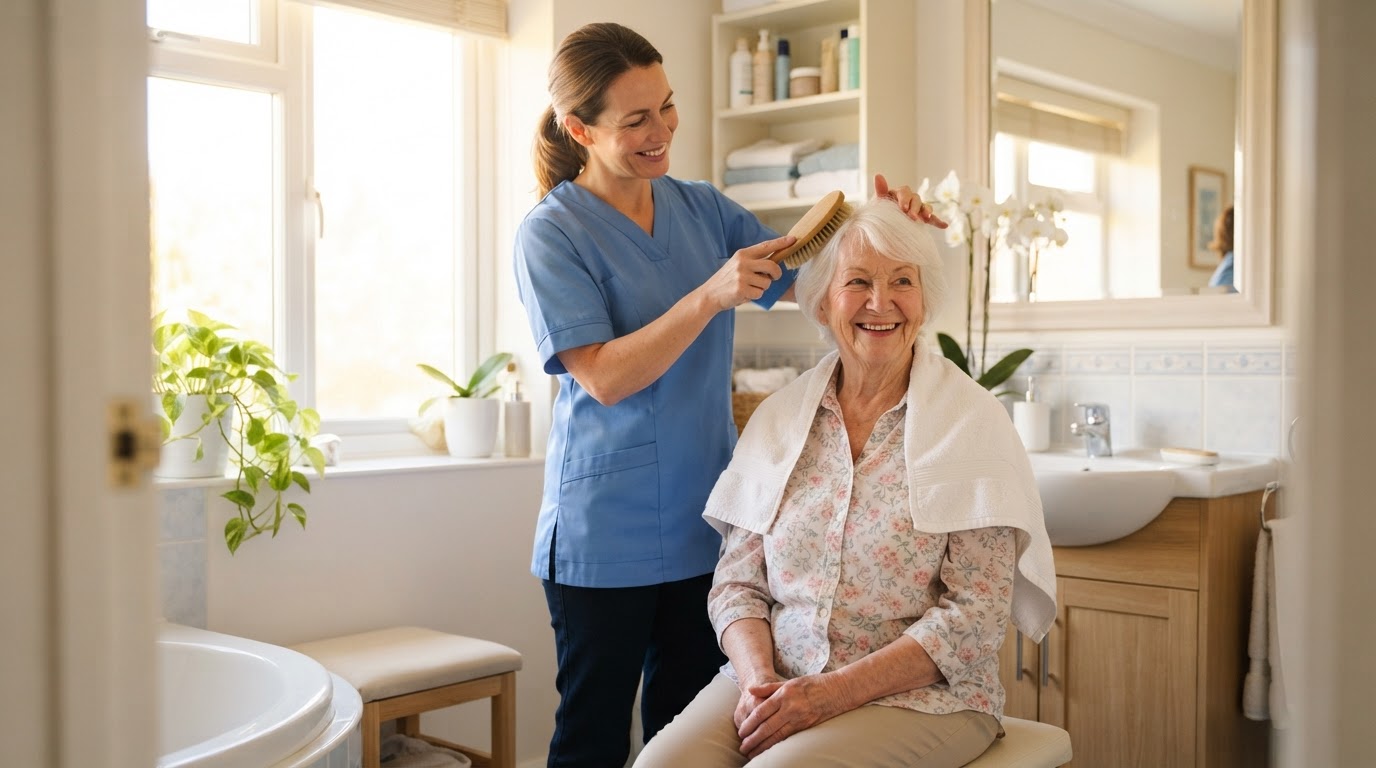
Hair is one of the most personal parts of grooming, and keeping it clean and styled the way a senior likes helps them feel like themselves. For seniors who find washing their hair at the sink or in the shower tiring or unsafe, a caregiver can help by supporting a comfortable seated wash, using a gentle shampoo, and helping with rinsing and towel-drying. Between washes, regular brushing keeps hair tidy, distributes natural oils, and can be a soothing, dignified part of the day.
Simple adjustments make a big difference: a lightweight brush that is easier to grip, a longer-handled comb for hard-to-reach areas, and a schedule that matches the senior's energy. For seniors who visit a salon or barber, a caregiver can help coordinate and accompany them, so a regular haircut stays part of the routine. Keeping hair clean and styled is a natural companion to our bathing and hygiene support, which keeps the full routine of personal care running smoothly.
Nail Care, Shaving, and Oral Care
Nails need regular attention for both comfort and safety. Fingernails that are too long can scratch and harbor bacteria, and toenails that go untended can become painful and affect walking. For many seniors, reaching the feet or gripping small clippers is simply no longer possible. A caregiver can help with gentle filing and basic nail care, and can watch for changes that should be brought to a podiatrist's attention. Foot comfort is closely tied to mobility and independence, which is why attentive daily care matters so much.
Shaving is another grooming task where help is often welcome. Whether a senior prefers a clean shave or a trimmed beard, a caregiver can offer a steady hand, a warm towel, and a safe electric razor to make the routine comfortable and reduce the risk of nicks. Oral care — brushing, flossing, and keeping dentures clean — is part of the same daily grooming rhythm and is essential for both comfort and health. A caregiver helps by keeping these small but important tasks consistent, even on days when a senior is tired or forgetful.
Dressing with Dignity and Ease
Choosing an outfit and getting dressed is the part of grooming that most visibly shapes how a senior presents themselves to the world. When dressing becomes difficult, a senior may start wearing the same easy items every day, losing the pleasure and self-expression of choosing clothes. A caregiver helps by laying out clean, weather-appropriate clothing, offering choices that respect the senior's preferences, and assisting with buttons, zippers, socks, and shoes.
Small adaptations make dressing easier and safer: elastic waistbands, Velcro closures, slip-on shoes, and front-fastening garments reduce the strain on stiff hands and tired shoulders. The goal is not to take over, but to make it possible for the senior to participate as much as they can and want to. This kind of patient, respectful help is the heart of our dressing assistance, which keeps the morning routine dignified and on track.
Building a Grooming Routine That Lasts
The foundation of good grooming at home is consistency and respect. A predictable daily routine — wash, brush, dress, tidy — gives the day structure and makes grooming feel like a normal part of life rather than a chore. Breaking tasks into small steps, allowing plenty of time, and encouraging the senior to do as much as they comfortably can preserves both ability and dignity. When a caregiver is present, these routines happen reliably, even on days when a senior is low on energy.
It also helps to keep grooming supplies within easy reach, choose tools that are comfortable to hold, and make the bathroom or dressing area safe and well-lit. Hydration and nutrition play a role too — well-nourished skin and hair are easier to care for — so steady meals and fluids support grooming along with everything else. Our meal preparation support helps families keep nutrition consistent, which shows up in healthier skin, hair, and energy for daily routines.
Expert Guidance and Local Support
The National Institute on Aging offers practical guidance on helping older adults with daily personal care and grooming (nia.nih.gov), and the Centers for Disease Control and Prevention provides resources on oral health for older adults (cdc.gov). If your loved one could use a steady, respectful hand with grooming and personal appearance, our bathing and hygiene care and Greater Milwaukee caregivers are here to help.
Conclusion
Grooming and personal appearance are about far more than looking neat — they are about dignity, identity, and the quiet confidence that comes from feeling like yourself. When aging makes these everyday rituals difficult, the answer is not to let them slip, but to bring in the kind of patient, respectful support that keeps them going. With a consistent routine, a few thoughtful adaptations, and the steady presence of a caregiver who treats every task with care, older adults can stay well-groomed, comfortable, and engaged with the world around them. The most important step is building that routine before grooming becomes a struggle, so that personal care never has to become a source of stress. With the right support, seniors can look and feel their best, comfortably and confidently at home.