Vision Health for Seniors: A Guide to Eye Care and In-Home Support
Sarah Jenkins
Vision is one of the most precious senses, and preserving it becomes increasingly important as we age. According to the National Eye Institute, more than 12 million Americans age 40 and older have some form of vision impairment, and that number is expected to grow significantly as the population ages. For seniors, vision changes can affect everything from reading medication labels to safely navigating the home. Understanding common eye conditions, recognizing the warning signs, and knowing how to support a loved one through vision changes are essential steps for families and caregivers committed to helping older adults maintain their independence and quality of life.
Common Age-Related Eye Conditions
As we grow older, our eyes undergo natural changes that can affect how clearly and comfortably we see. While some changes are a normal part of aging, others signal more serious conditions that require medical attention. Knowing the difference helps families respond appropriately and seek timely treatment.
Cataracts
Cataracts are one of the most common age-related eye conditions, affecting more than half of all Americans by age 80. A cataract occurs when the normally clear lens of the eye becomes cloudy, causing vision to appear blurred or dim, as though looking through a frosted window. Cataracts develop slowly and painlessly, which means many seniors may not realize how much their vision has deteriorated until the condition is advanced. Common symptoms include difficulty seeing at night, sensitivity to glare, fading of colors, and frequent changes in eyeglass prescriptions. Fortunately, cataract surgery is one of the safest and most effective procedures performed today, with a success rate of over 95 percent.
Age-Related Macular Degeneration (AMD)
Age-related macular degeneration is the leading cause of vision loss in people over 50. It affects the macula, the central part of the retina responsible for sharp, detailed vision needed for reading, driving, and recognizing faces. AMD does not cause total blindness, but it can severely impair a senior's ability to perform everyday tasks. There are two types: dry AMD, which is more common and progresses slowly, and wet AMD, which is less common but can cause rapid vision loss. Early symptoms include straight lines appearing wavy, dark or blank spots in the center of vision, and difficulty seeing in low light. While there is no cure for AMD, treatments such as anti-VEGF injections for wet AMD and specialized vitamin supplements for dry AMD can slow its progression.
Glaucoma
Glaucoma is a group of eye diseases that damage the optic nerve, often due to elevated pressure inside the eye. It is sometimes called the "silent thief of sight" because it typically has no symptoms in its early stages and can cause irreversible vision loss before a person notices any changes. The most common form, open-angle glaucoma, develops gradually and painlessly, first affecting peripheral vision before advancing to central vision. Regular comprehensive eye exams that include measuring intraocular pressure are critical for early detection. Once vision is lost to glaucoma, it cannot be restored, but medicated eye drops, oral medications, and surgery can help preserve remaining vision.
Diabetic Retinopathy
For seniors living with diabetes, diabetic retinopathy is a serious concern. High blood sugar levels can damage the blood vessels in the retina, causing them to leak fluid or bleed, which can lead to distorted vision or blindness. The condition often progresses without symptoms in its early stages, making regular eye exams essential for anyone with diabetes. Controlling blood sugar, blood pressure, and cholesterol levels can significantly reduce the risk of developing diabetic retinopathy or slow its progression.
Warning Signs Every Family Should Know
Many serious eye conditions develop gradually, and seniors may adapt to their declining vision without realizing how much they have lost. Family members and caregivers are often the first to notice the changes. Being alert to the following warning signs can lead to earlier diagnosis and better outcomes:
- Squinting frequently or holding reading materials very close to the face.
- Complaining about blurry or double vision, even with glasses.
- Difficulty reading signs, medication labels, or food packaging.
- Bumping into furniture, doorframes, or other objects more frequently.
- Hesitating or struggling on stairs, curbs, or uneven surfaces.
- Complaining that lights seem dimmer or rooms appear darker than usual.
- Avoiding activities that require detailed vision, such as reading, sewing, or watching television.
- Noticing halos around lights, especially at night.
- Experiencing eye pain, redness, or sudden changes in vision, which require immediate medical attention.
If you observe any of these signs, schedule a comprehensive eye exam with an ophthalmologist or optometrist as soon as possible. Many vision-threatening conditions are treatable when caught early, and a delay can mean the difference between preserving sight and permanent vision loss.
Preventive Eye Care for Seniors
While some vision changes are an unavoidable part of aging, there are many steps seniors can take to protect their eye health and reduce the risk of serious conditions. Prevention is always more effective than treatment after damage has occurred.
Schedule Regular Eye Exams
The American Optometric Association recommends that adults age 60 and older have a comprehensive eye exam at least once a year, even if they have no noticeable vision problems. These exams do more than check visual ac—they allow eye care professionals to detect early signs of cataracts, glaucoma, AMD, and other conditions before symptoms appear. For seniors with diabetes, high blood pressure, or a family history of eye disease, more frequent exams may be recommended.
Manage Underlying Health Conditions
Systemic health conditions like diabetes and hypertension have a direct impact on eye health. High blood sugar damages retinal blood vessels, while high blood pressure can restrict blood flow to the optic nerve. Managing these conditions through medication, diet, and regular medical care is one of the most effective ways to protect vision. Quitting smoking is also critically important, as smoking significantly increases the risk of cataracts, AMD, and optic nerve damage.
Eat a Vision-Supporting Diet
Nutrition plays a significant role in eye health. The Age-Related Eye Disease Study (AREDS) sponsored by the National Eye Institute found that a specific combination of vitamins and minerals—including vitamin C, vitamin E, zinc, copper, lutein, and zeaxanthin—can reduce the risk of AMD progression. Foods rich in these nutrients include leafy green vegetables like spinach and kale, colorful fruits and vegetables, eggs, nuts, and fatty fish such as salmon and tuna. A balanced diet that supports overall cardiovascular health also supports the tiny blood vessels that supply the eyes.
Protect Eyes from UV Light
Long-term exposure to ultraviolet (UV) rays from the sun increases the risk of cataracts and AMD. Seniors should wear sunglasses that block 99 to 100 percent of both UVA and UVB rays whenever they are outdoors, even on cloudy days. Wide-brimmed hats provide additional protection by reducing the amount of UV light that reaches the eyes from above and the sides.
How In-Home Caregivers Support Seniors with Vision Impairment
For seniors experiencing vision loss, professional in-home caregivers provide essential support that helps them maintain safety, independence, and quality of life. Their role extends far beyond physical assistance—they serve as guides, advocates, and companions who help seniors navigate the challenges of diminished sight. For families in the Greater Milwaukee area, trained caregivers from Med Group's Milwaukee home care team offer compassionate, individualized support tailored to each senior's unique vision needs.
Medication Management
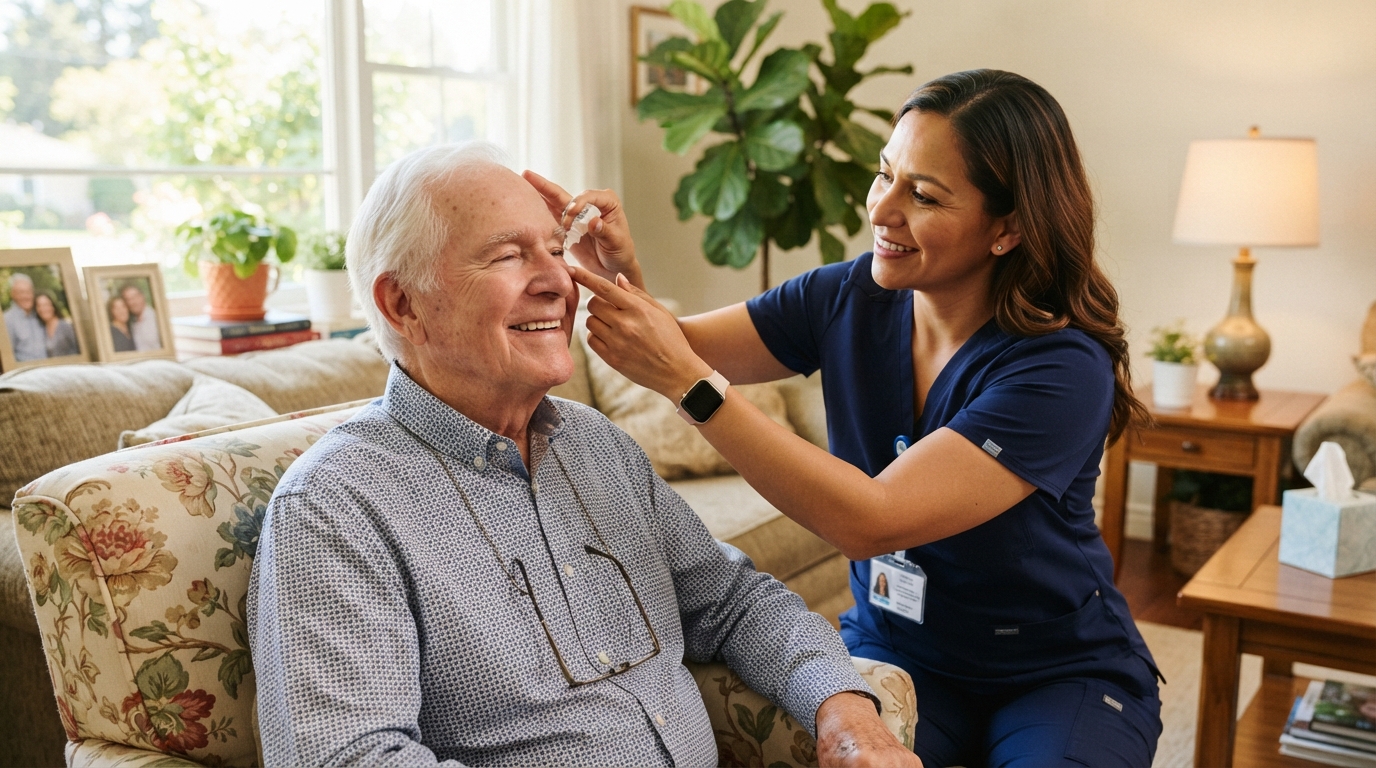
One of the most critical challenges for seniors with vision impairment is managing medications safely. Reading small print on pill bottles, distinguishing between similar-looking medications, and following dosing instructions can be difficult or impossible without clear vision. Caregivers help by organizing medications in clearly labeled containers, reading instructions aloud, administering eye drops on schedule, and monitoring for side effects. This support prevents dangerous medication errors and ensures that treatment regimens, including eye drops for glaucoma or post-surgical care, are followed correctly.
Home Safety and Navigation
Vision impairment significantly increases the risk of falls and household accidents. Caregivers help by ensuring that living spaces are well-lit, free of clutter, and arranged for easy navigation. They can identify and remove tripping hazards, ensure that frequently used items are within easy reach, and verify that visual alert systems (such as flashing smoke detectors) are functioning. During walks and outings, caregivers provide sighted guidance, describing the environment and alerting the senior to obstacles, curbs, and changes in terrain.
Transportation and Accompaniment
Driving becomes unsafe for seniors with significant vision loss, which can lead to isolation and missed medical appointments. Caregivers provide transportation to eye doctor visits, the pharmacy, the grocery store, and social activities. They can also accompany seniors to medical appointments, taking notes on the doctor's instructions, asking clarifying questions, and ensuring that follow-up care is understood and scheduled. This accompaniment is especially valuable after procedures like cataract surgery, when temporary vision changes make independent travel difficult.
Reading and Communication Assistance
Caregivers help seniors stay connected to information and communication by reading mail, newspapers, books, and important documents aloud. They can assist with writing letters or emails, making phone calls, and using assistive technology such as screen readers or voice-activated devices. This support helps seniors stay informed, engaged, and connected to their community, reducing the social isolation that often accompanies vision loss.
Emotional Support and Companionship
Vision loss can be frightening and deeply frustrating, particularly for seniors who have always been independent. Feelings of grief, anger, and helplessness are common. Caregivers provide emotional support by listening with empathy, encouraging independence wherever safely possible, and helping seniors focus on what they can still do rather than what they have lost. Regular companionship, shared activities, and gentle encouragement help seniors adjust to vision changes and maintain a positive outlook.
Assistive Technology and Home Modifications
A range of tools and modifications can help seniors with vision impairment live more independently. Caregivers can help families identify and implement these solutions:
- Magnifying devices: Handheld and stand magnifiers for reading books, labels, and mail.
- Large-print materials: Books, clocks, calendars, and phone keypads with enlarged text and numbers.
- Screen readers and voice-activated assistants: Devices like Amazon Alexa or Google Home that can read news, set reminders, and make calls using voice commands.
- Improved lighting: Brighter bulbs, task lighting for reading, and nightlights along hallways and staircases.
- Contrast markings: Bright tape on stair edges, doorframes, and light switches to make them easier to see.
- Tactile markers: Bump dots or raised markers on appliance buttons, remote controls, and keypads to identify settings by touch.
- Smart home safety devices: Voice-activated alarms, doorbell cameras, and automated lighting systems.
Expert Guidance and Local Support
The National Eye Institute offers comprehensive information on age-related eye diseases, prevention strategies, and treatment options (nei.nih.gov/learn-about-eye-health). The American Optometric Association also provides guidance on senior eye care and recommended exam schedules (aoa.org/healthy-eyes). If your loved one is experiencing vision changes that affect daily life, our Daily Living Support services provide hands-on assistance with medication management, meal preparation, and household safety, and our Mequon-area caregivers are available to support families throughout Ozaukee County and the surrounding communities.
Conclusion
Vision health is a vital but often overlooked aspect of senior well-being. By understanding common age-related eye conditions, recognizing the warning signs, scheduling regular eye exams, and embracing preventive care, families can help their loved ones preserve their sight for as long as possible. When vision loss does occur, professional in-home caregivers provide the practical assistance, safety support, and emotional companionship that make living with impaired vision not just manageable, but fulfilling. With the right combination of medical care, assistive technology, and compassionate support, seniors with vision challenges can continue to live safely, confidently, and meaningfully in the homes they love.